
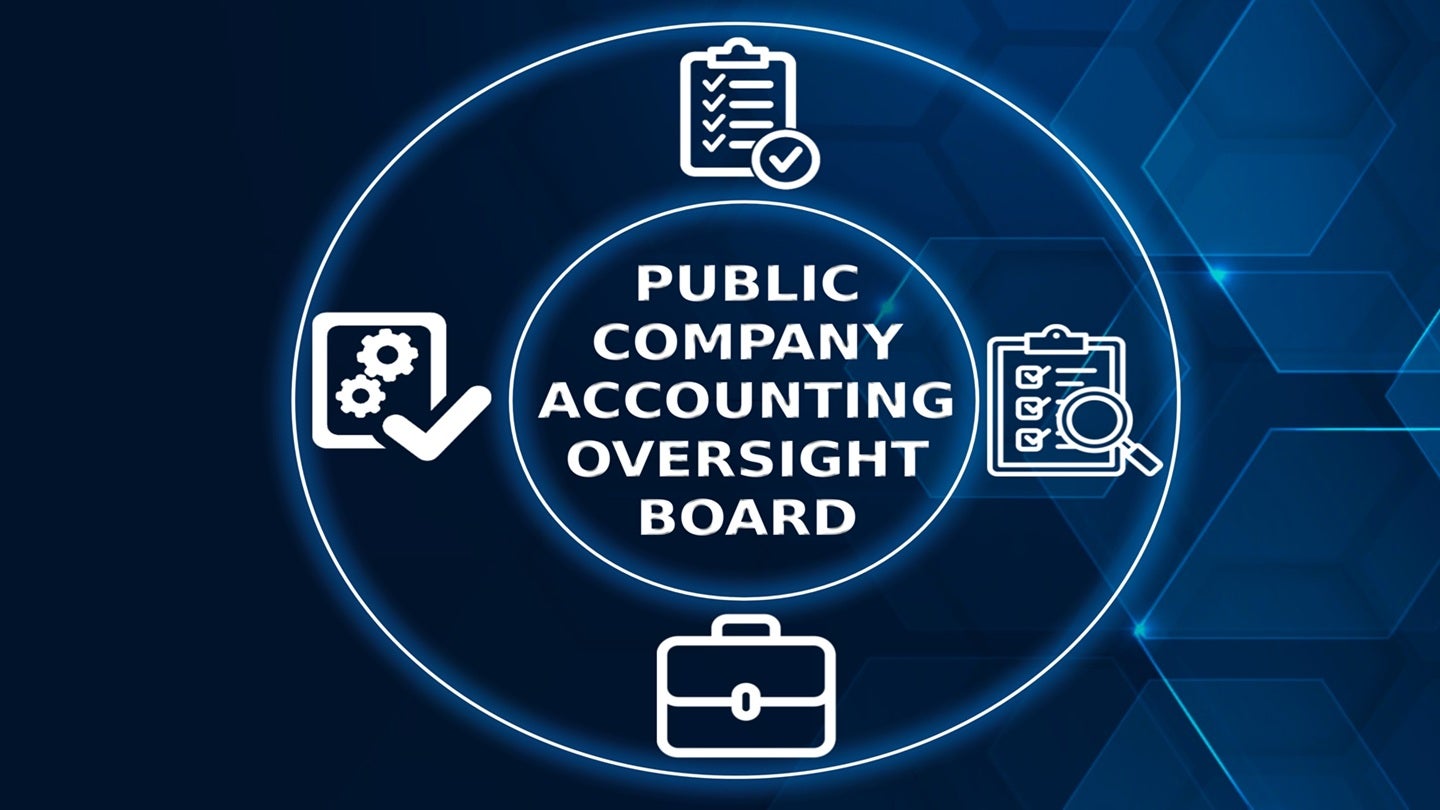
The Public Company Accounting Oversight Board (PCAOB) has approved its strategic plan for 2026 to 2030, alongside a fiscal year 2027 budget set at $350m.
The funding plan is designed to provide the resources needed to carry out the multi-year blueprint and meet the regulator’s statutory duties under the Sarbanes-Oxley Act.
Go deeper with GlobalData


Access deeper industry intelligence
Experience unmatched clarity with a single platform that combines unique data, AI, and human expertise.
Under federal law, the 2027 budget remains subject to formal examination and final clearance by the US Securities and Exchange Commission.
The five-year strategy updates the regulatory programme for auditing public companies around three pillars. These include advancing audit quality and investor protection, clarifying expectations for stakeholders, and transforming operations to better deliver on the investor protection mission.
Operationally, the board has divided its work into five distinct areas, beginning with modernising standards so that regulatory rules align with contemporary commercial practices and audit technologies.
Supervisory functions will be adapted at the same time, with the PCAOB overhauling its inspection and registration systems to spot audit shortfalls and registration gaps more rapidly.
Disciplinary resources will be steered toward acute investor exposures, targeting enforcement inquiries at improper conduct that results in demonstrable financial damage.
External dialogue will also be stepped up, with the watchdog planning deeper engagement with investors, corporate preparers, and audit committees to increase transparency around its inspection findings.
The operational agenda concludes with an internal upgrade across the organisation, focused on boosting analytical tools and overall operating capacity.
The finalised roadmap follows an extended drafting process that began in March 2026, when the board first gathered public views on its prospective priorities.
PCAOB chairman Demetrios Logothetis said: “This plan sets goals and provides clear objectives on how we are going to achieve those goals, all of which is anchored in the expectation that we get back to the basics of ensuring audits are performed with rigor, integrity, and consistency.”