The first round table of the second and final plenary of the French accountants’ institute annual congress explored the role the EU can or should play in international financial regulation, especially in the geopolitical wars of standard-setting. Vincent Huck reports
In an introductory video address, Sylvie Goulard MEP, presented a report compiled under her leadership by the Committee on Economic and Monetary Affairs (ECON) and presented to the European Parliament in June, entitled Report on the EU role in the framework of international financial, monetary and regulatory institutions and bodies.

Access deeper industry intelligence
Experience unmatched clarity with a single platform that combines unique data, AI, and human expertise.
“The objective was to bring to the attention of politicians and economic actors a reality that tends to create problems,” she explained. “Who decides the economic rules? This question quite simply is becoming really complicated to answer because organisations of different natures – international organisations, but also private professional organisations with varied representation and different types of funding – adopt orientations which don’t aim to become law, but informal rules or frameworks.”
This soft law ends up imposing itself on the economic actors, she said. “Either because politicians don’t take responsibility or because of the anticipation of the economic actors, governments give lawful value to texts which were informal orientations.”
ECON’s report suggested the EU strengthen its representation in these international organisations such as the IASB, IOSCO and the Basel Committee. “So that we can defend the rules adopted in the EU Parliament through a democratic process,” Goulard said. “The main idea is to re-establish some transparency to know what’s happening in those organisations and some accountability meaning that these institutions are in discussion with people who’ve been elected by citizens. So that in those institutions, the EU exists and defends its position, not against others, but because our view is legitimate.”
Goulard’s video address was followed by a Q&A session with EFRAG president Jean-Paul Gauzes and the director general of The Directorate-General for Financial Stability, Financial Services and Capital Markets Union (DG FISMA) Olivier Guersent, who answered questions from European journalist Annette Burgdorf.
Gauzes presented EFRAG’s primary mission as advising the EU Commission on the adoption of IFRS. This is mostly done through the work of EFRAG’s technical committee’s research and reflection, which forms the basis of the opinions proposed to the EC. The EC is then free to follow, or not, the recommendation of EFRAG.
“It’s a technical topic but extremely political which obliges us to do impact studies of standard adoption which need to be really high level so that we understand the consequence of adoption for businesses and the European economy,” Gauzes said.
Asked his views on Goulard’s report, he said he was in agreement that organisations with no accountability shouldn’t start to be legislators; at the same time legislators need to have some expertise. “That’s where EFRAG closes the link with MEPs,” he said. “And we have technical meetings, not political, on the potential consequence of some of the standards.”
DG FISMA’s first mission is to put together the whole financial regulation of the EU, Guersent explained. “Bearing in mind that member states financial regulation is 100% transposed from EU regulations and directives, because of the well-being of the single market.”
DG FISMA’s second mission is to ensure financial stability, he continued, so when, for example there’s a problem in a bank, agents from the DG FISMA are sent to try to solve the issues.
To deliver on those missions the DG FISMA represents the EC to all the standard-setters for banking, insurance and accounting.
“We need international standards. It’s normal in a globalised world especially in finance; you need everyone playing by the same rules,” Guersent said. “But these standards are extremely technical and extremely political because they project a vision of the world. They have an impact on the activity of businesses and are better adapted to the existing model in some regions than other, so there’s a big power struggle in those institutions, because underneath the technical is the political.”
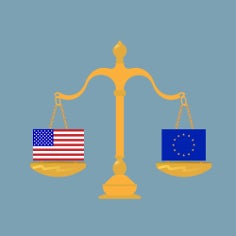
Guersent noted in particular the permanent fight between the EU and the USA taking place at all the standard-setters. “An interesting aspect of Madame Goulard’s report is that we are fragmented,” he continued. “The EC represents the whole of the EU, but in some of those international standard-setters we find representatives of member states which don’t necessarily have the same interests as the EU.”
Some member states have interests closer to the USA and play in their camp. Others are with the Commission, and a third group pursue their own interests, Guersent explained.
“The result, of course, is that even though we are the first economic zone in the world, and especially the first zone in the financial sector, we end up with standards that are not relevant to us,” he said. “If I take the example of the IFRS, the EU chose to abandon its accounting sovereignty. We said we are delegating to the IASB the task to develop our standards.”
The EU through the DG FISMA pays for 30% of the IASB’s budget but has as many representatives in the monitoring board than the USA which pays 0% of the budget, Guersent argued. This is a problem, he said, considering that the EU is the only region of the world which applies fully the IFRS, and that, according to him, those standards are very “Anglo-Saxon”.
“Since 2004 when we decided to go with IFRS, until now, we can either adopt an IFRS or not apply it. I’ve been lobbying for the EU to be able to modify partly or fully an IFRS,” he said. “I want this, not to use it, because obviously we don’t want structures which are similar to IFRS but not really IFRS, but so that we are taken a bit more seriously when we say that a particular standards doesn’t do it for us and that this or that should be changed.”
The reason that the EU doesn’t weight fully internationally is because it is fragmented, he concluded. “Unfortunately member states are unready to give up part of their sovereignty for us to weight more altogether – unfortunately as long as this continues we won’t be able to do more.”