
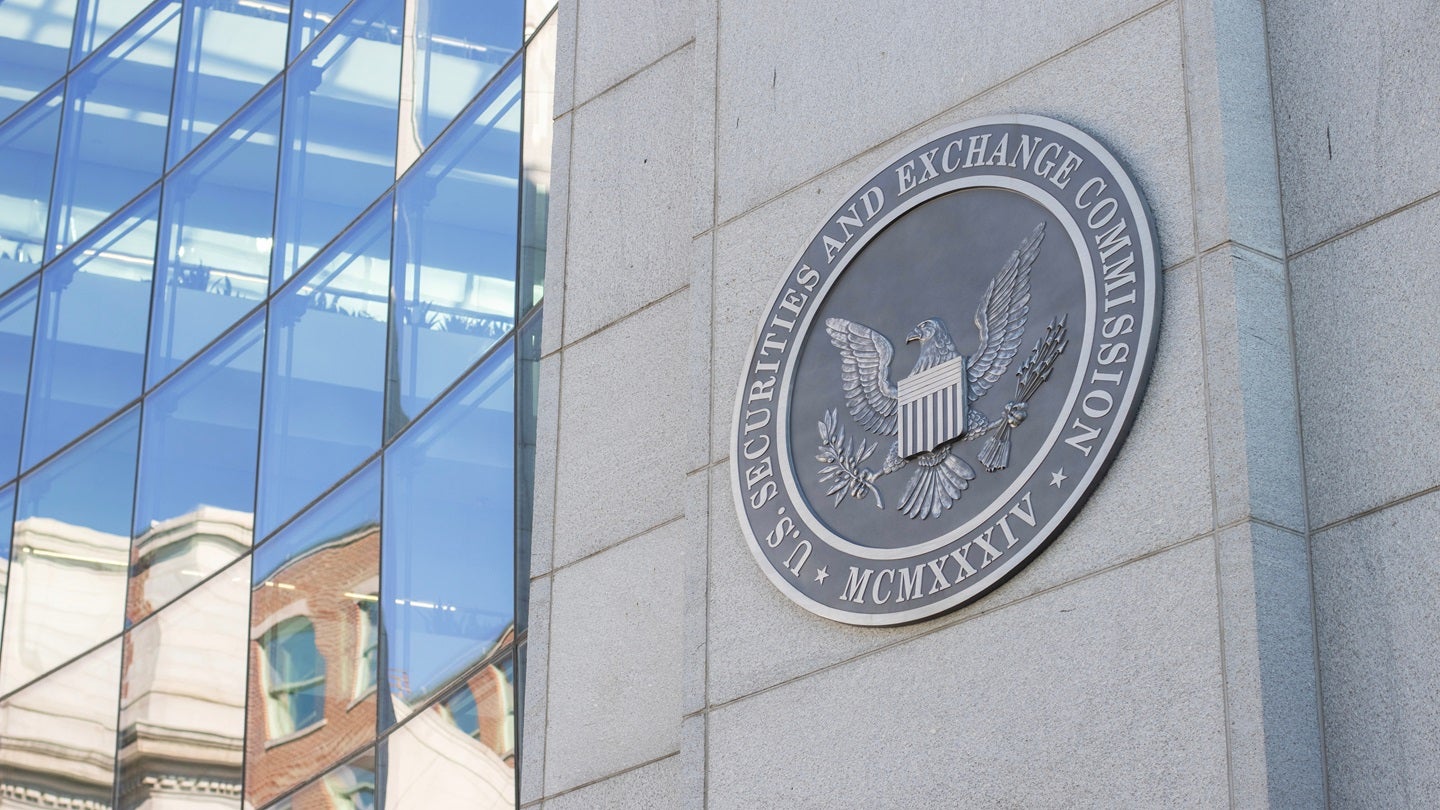
The US Securities and Exchange Commission (SEC) has proposed changes to the rules used to determine which registered investment companies, investment advisers and business development companies can be considered as small entities.
The proposed changes would amend the rules under the Regulatory Flexibility Act (RFA).
Go deeper with GlobalData


Access deeper industry intelligence
Experience unmatched clarity with a single platform that combines unique data, AI, and human expertise.
Under the RFA, federal agencies must carry out specific assessments intended to reduce the likelihood that new federal rules will impose a substantial economic burden on small entities.
The proposal would increase the size limits used to classify investment companies and investment advisers as small entities.
The aim is to help the Commission better tailor its analyses to the regulatory challenges small entities face and adapt its future rules as needed.
In practical terms, the SEC would lift the asset-based cut-offs that sit behind the small-entity definition for these registrants.
US Tariffs are shifting - will you react or anticipate?
Don’t let policy changes catch you off guard. Stay proactive with real-time data and expert analysis.
By GlobalDataIt would also revise how the assets of related funds are combined when applying the definition, and it would allow the Commission to update the asset thresholds for inflation by order every ten years.
The proposal will be published in the Federal Register. Public comments may be submitted up to 60 days after the publication date.
SEC chairman Paul Atkins said: “The Commission has a long-standing commitment to understanding and addressing the concerns of small entities.
“Today’s proposal – consistent with the SEC’s intent to modernise regulatory requirements – would further this commitment by more accurately capturing the types and numbers of investment advisers and investment companies that are ‘small’.
“This, in turn, would help the Commission more appropriately promote the effectiveness and efficiency of its regulations, with the goal of minimising the significant economic impact on small entities.”