
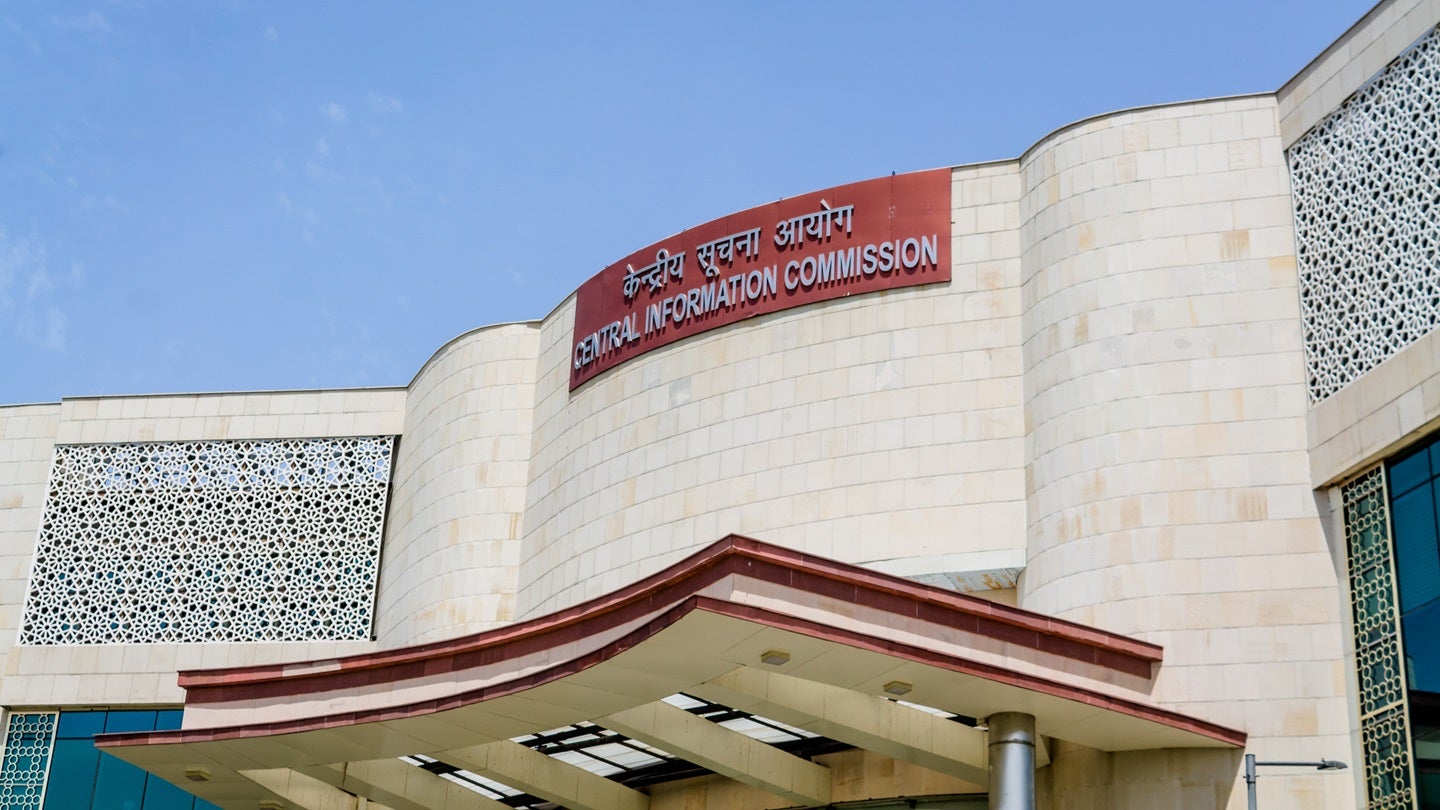
India’s Central Information Commission (CIC) has called on the National Financial Reporting Authority (NFRA) to put in the public domain its orders, directions, circulars and policy decisions that influence audit practices and standards.
The recommendation was issued while the CIC was ruling on an appeal under the Right to Information (RTI) Act , according to a Press Trust of India report.
Go deeper with GlobalData


Access deeper industry intelligence
Experience unmatched clarity with a single platform that combines unique data, AI, and human expertise.
The appeal requested records on the NFRA’s decision to allow auditors and audit practices to be represented by lawyers during oral hearings.
Stressing the importance of greater openness in rule-making around audits, the Commission observed: “Any orders, directions, circulars and policy decisions affecting audit practices and standards should be placed in public domain for protecting public interest by strengthening trust in financial reporting.”
The CIC also pointed to the NFRA’s obligations under the RTI law to proactively publish information.
The order stated: “There is no denying that the respondent is duty bound by virtue of the provisions of Section 4 of the RTI Act to publish the information indicated in Section 4(1)(b) and 4(1)(c) on its website so that the public have minimum resort to the use of the RTI Act to obtain the information.”
US Tariffs are shifting - will you react or anticipate?
Don’t let policy changes catch you off guard. Stay proactive with real-time data and expert analysis.
By GlobalDataThe NFRA, created in 2018 under the Companies Act, 2013, is the statutory body that supervises auditors. It ensures adherence to accounting and auditing standards for companies.
Its responsibilities also include monitoring the quality of audits to support dependable financial disclosures.
CIC Information Commissioner PR Ramesh was quoted by the news agency as saying: “NFRA safeguards the credibility of financial statements, which are relied upon by investors, lenders, regulators and the public at large.”